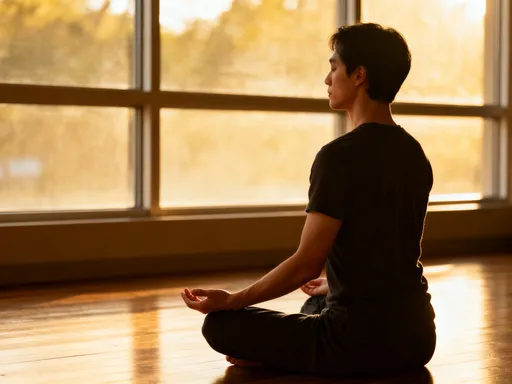
Why Morning Stillness Changed My Whole Day — A Real Routine Hack
Have you ever felt rushed even before getting out of bed? I did — until I started blending simple yoga and meditation into my mornings. It wasn’t about perfection, but consistency. Drawing gently from traditional Chinese wellness principles, this practice isn’t flashy, but it’s effective. Over time, I noticed deeper calm, better focus, and less stress. This is not a quick fix, but a real, doable rhythm that fits into ordinary life. Let me walk you through how small, steady steps created real change — and how you can build your own sustainable routine too.
The Chaos Before Calm: Recognizing the Need for Routine
Many people begin their days already behind. The alarm rings, and instead of rising with purpose, the hand reaches for the phone. Emails, messages, news alerts — the mind is flooded before the feet touch the floor. This pattern, repeated day after day, creates a cycle of mental clutter and emotional fatigue. There is no transition from rest to activity, only abrupt immersion into demands. Over time, this erodes energy, weakens focus, and dulls emotional resilience. The body, designed for rhythm, suffers when mornings lack structure and intention.
Traditional Chinese Medicine (TCM) has long emphasized the importance of daily rhythm in maintaining health. According to TCM, the body follows a natural flow of qi — vital energy — that moves through organ systems in two-hour intervals throughout the day. The early morning hours, particularly between 5 a.m. and 7 a.m., are associated with the large intestine, a time meant for elimination and release, both physically and mentally. When this window is disrupted by stress or digital overload, the body’s ability to reset is compromised. Without this gentle start, the day unfolds from a place of imbalance.
Routine regularity is not about rigidity, but about creating a supportive framework. It is the difference between reacting to life and responding with clarity. A predictable morning sequence signals safety to the nervous system, allowing the body to shift from survival mode into a state of calm readiness. This does not mean every day must be identical, but that certain foundational practices anchor the start of the day. When habits are erratic, energy is wasted on decision-making and emotional regulation. A consistent rhythm conserves energy, leaving more available for meaningful tasks and relationships.
For many, the absence of such a rhythm manifests as low-grade anxiety, difficulty concentrating, or a sense of being constantly overwhelmed. These are not signs of personal failure, but signals from the body that balance is needed. The good news is that change does not require drastic overhauls. Small, intentional shifts in the first thirty minutes of the day can begin to restore natural alignment. The journey from chaos to calm starts not with more effort, but with more presence.
Why Yoga and Meditation? Bridging Ancient Wisdom and Modern Life
Yoga and meditation are often misunderstood as practices reserved for the flexible or the spiritually advanced. In reality, their true value lies in simplicity and accessibility. In this context, yoga means gentle movement that reconnects body and breath — not complex poses, but mindful stretching that invites awareness. Meditation is not about emptying the mind, but about observing thoughts without attachment, creating space between stimulus and response. Together, they form a powerful foundation for daily well-being, especially when practiced in the morning.
These practices align closely with traditional Chinese wellness principles, particularly the balance of yin and yang. Yin represents stillness, receptivity, and internal reflection; yang embodies action, energy, and outward engagement. Modern life tends to overemphasize yang — constant doing, producing, achieving — while neglecting yin. Morning yoga and meditation reintroduce yin at a time when the body is naturally more inward-focused. This balance supports organ function, particularly the heart and liver, which TCM associates with emotional regulation and detoxification.
From a physiological perspective, these practices help regulate the autonomic nervous system. The sympathetic nervous system, responsible for the “fight or flight” response, is often overactive in today’s fast-paced world. Gentle movement and mindful breathing activate the parasympathetic nervous system, which governs “rest and digest” functions. This shift lowers cortisol levels, reduces heart rate, and improves oxygenation of the blood. Over time, this leads to better sleep, improved digestion, and greater emotional stability.
What makes this approach sustainable is its adaptability. It does not require special equipment, a dedicated studio, or hours of time. Five to ten minutes of intentional practice can yield noticeable benefits. The key is consistency, not duration. When practiced regularly, these habits rewire the brain’s response to stress, making it easier to remain calm under pressure. This is not a temporary fix, but a long-term investment in resilience and clarity.
The First Step: Starting Small Without Overwhelm
One of the most common barriers to beginning a wellness practice is the belief that it must be extensive or perfect. Many imagine yoga as an hour-long session with advanced poses, or meditation as complete mental silence. These misconceptions create unnecessary pressure. The truth is, even two minutes of deep breathing can shift the nervous system. The goal is not achievement, but presence. Starting small removes the intimidation factor and makes the practice accessible, even on the busiest mornings.
A simple beginner sequence might include two minutes of diaphragmatic breathing — inhaling deeply through the nose, allowing the belly to rise, and exhaling slowly through the mouth. This alone activates the vagus nerve, a key component of the parasympathetic system. Follow this with three minutes of gentle stretching: neck rolls to release tension, shoulder shrugs and releases to ease upper body stiffness, and cat-cow movements to awaken the spine. These movements require no prior experience and can be done in sleepwear, right beside the bed.
Mental blocks are common, especially in the early stages. Thoughts like “I don’t have time” or “I can’t quiet my mind” often arise. These can be reframed with compassion. “I don’t have time” becomes “I am choosing to prioritize my well-being, even in small ways.” “I can’t quiet my mind” becomes “I am learning to observe my thoughts without judgment.” The practice is not about stopping thoughts, but about changing the relationship to them. Each morning becomes an opportunity to begin again, without criticism.
The power of small actions lies in their cumulative effect. A five-minute practice may feel insignificant at first, but when repeated daily, it builds momentum. It becomes a quiet act of self-respect, a way of saying, “I matter.” Over time, the body begins to anticipate this moment of stillness, and the mind learns to settle more quickly. The habit grows not from force, but from gentle repetition.
Building the Habit: Designing a Realistic Daily Structure
Consistency is more important than duration. A five-minute practice done daily is more effective than a thirty-minute session done once a week. The brain thrives on predictability, and habits are strengthened when tied to existing routines. One effective strategy is habit stacking — linking the new practice to an established one. For example, after brushing teeth or pouring the first cup of tea, transition directly into a few minutes of breathing and stretching. This creates a natural cue, reducing the need for willpower.
Choosing a fixed space and time further supports habit formation. Even a small corner of a bedroom, with a mat or cushion, can become a sacred space for stillness. The environment sends signals to the brain: this is where calm happens. Over time, simply entering this space can trigger a shift in state. Lighting a candle, playing soft instrumental music, or using a diffuser with calming scents like lavender can enhance the ritual. These sensory cues deepen the association between the space and the practice.
Morning is often the most reliable time for such a routine. The mind is less cluttered, and the day has not yet filled with demands. Waking just fifteen minutes earlier can create enough space without disrupting family responsibilities. For those with early caregiving duties, the practice can be adapted — even seated breathing while waiting for a child to wake up counts. The key is to protect this time as non-negotiable, a gift to oneself that ultimately enhances the ability to care for others.
Flexibility within structure is essential. Life is unpredictable, and rigid expectations can lead to guilt when the routine is missed. Instead, the goal is to return to the practice, not to maintain perfection. Some days, the full sequence may be possible; on others, only one minute of breath awareness. Both are valid. The habit is not broken by a missed day — it is sustained by the choice to begin again.
Listening to Your Body: Adapting with Intention
A sustainable practice requires attunement to the body’s daily signals. Some mornings call for gentle stillness; others may invite more movement. This awareness is central to both yoga and traditional Chinese Medicine. TCM teaches that energy levels fluctuate not only throughout the day but also with the seasons. In winter, when nature contracts, the body may benefit from slower, more inward practices. In spring, when energy rises, dynamic stretches and deeper breaths may feel more appropriate.
Each day brings different needs. On a restless morning, a longer meditation or forward fold might be most supportive. On a sluggish day, gentle backbends or invigorating breathwork can awaken the system. The practice is not a fixed script, but a conversation with the self. This adaptability prevents burnout and keeps the routine aligned with actual needs, rather than external expectations.
Seasonal shifts offer a natural framework for variation. In summer, when yang energy is high, cooling practices like slow breathing and seated meditation help maintain balance. In autumn, a time of letting go, breathwork that emphasizes exhalation can support emotional release. These adjustments honor the body’s connection to nature, reinforcing the idea that wellness is not separate from the environment, but deeply intertwined with it.
Listening also means recognizing when rest is needed. There may be days when even five minutes feels like too much. On such mornings, simply sitting quietly with a cup of warm water or herbal tea can be the most nourishing choice. The intention behind the act — self-care, presence, respect — matters more than the form it takes. This flexibility ensures the practice remains a source of support, not another demand.
Overcoming Slumps: Staying on Track When Motivation Fades
Motivation naturally ebbs and flows. There will be weeks when the routine feels effortless, and others when getting out of bed seems hard enough, let alone practicing stillness. These moments are not failures, but part of the process. The goal is not to avoid slumps, but to navigate them with kindness. What matters most is the return, not the lapse.
One effective strategy is keeping a simple journal. Not a detailed log, but a brief note — just a checkmark or a word like “calm” or “tired” — to track practice. This builds awareness without pressure. Over time, patterns emerge, and the invisible progress becomes visible. Seeing a string of checkmarks can reignite commitment, even after a break.
Accountability can also help. Sharing the intention with a trusted friend, even without daily check-ins, creates a subtle sense of responsibility. Knowing someone else knows about the practice can make it harder to abandon. Alternatively, revisiting the original “why” — the reason for starting — can restore purpose. Was it to feel less anxious? To be more present with family? To reclaim a sense of control? These personal motivations anchor the practice in meaning.
Progress in wellness is often subtle. Changes may not be noticeable day to day, but after several weeks, a shift becomes clear — perhaps in how quickly one recovers from stress, or how calmly one responds to a child’s morning tantrum. These quiet victories are real, even if unmeasurable. Trusting the process, even when results are invisible, is part of the practice itself.
Long-Term Shifts: How Regular Practice Reshapes Daily Living
With time, the effects of morning stillness extend far beyond the first hour of the day. Improved focus becomes evident in daily tasks — fewer distractions, greater clarity in decision-making. Emotional resilience grows; small frustrations no longer escalate into full-blown stress. Digestion often improves, as the parasympathetic activation from morning practice carries into meal times, enhancing the body’s ability to process food. These benefits are not marketed as cures, but as natural outcomes of consistent self-care.
The routine begins to feel less like a task and more like a natural rhythm, as essential as brushing teeth or drinking water. It becomes a quiet commitment to well-being, a way of honoring the body’s need for balance. This is not about adding more to the day, but about starting the day in a way that makes everything else flow more easily. The mind, having been given a moment of peace, is better equipped to handle challenges.
Over months, many report a deeper sense of connection — to themselves, to family, to the present moment. This is not mystical, but practical. When the nervous system is regulated, empathy increases, patience lengthens, and communication improves. Relationships benefit not from grand gestures, but from the calm presence that comes from daily practice.
The integration of yoga, meditation, and rhythm offers a sustainable path to wellness. It is rooted in ancient wisdom, supported by modern understanding of the body, and adaptable to real life. It does not demand perfection, but invites presence. It is not about becoming someone else, but about returning to oneself, day after day, in the quietest moments of the morning. This is where transformation begins — not with noise, but with stillness.